Senator Bernie Sanders Proposes Partial Nationalization of AI Companies in the U.S.; Trump Administration Weighs Wealth Distribution Models
Bill suggests 50% public ownership and cash dividends, while the current administration studies ways to include the public in the sector's financial gains.
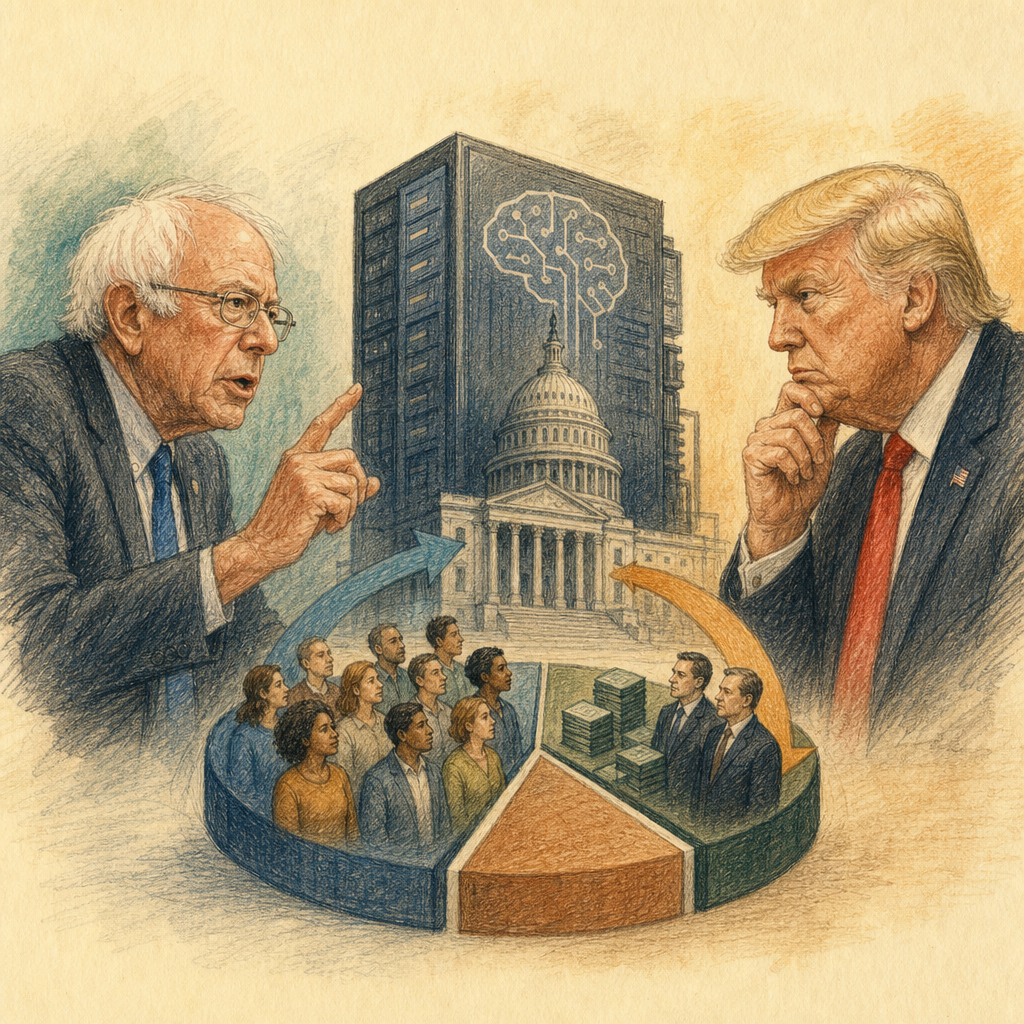
Senator Bernie Sanders has introduced a bill proposing 50% public ownership of artificial intelligence (AI) companies in the United States. The initiative also calls for distributing $1,000 dividends to the public, aiming to ensure that American citizens directly benefit from the advances and profits generated by this technology.
The debate over how to share the economic gains of AI has gained momentum in the U.S. political landscape, drawing the attention of the current administration. According to Vice President JD Vance, President Donald Trump supports the idea of giving the public a stake in AI companies.
Despite agreeing with the premise of public inclusion, the approach championed by the current administration differs from Sanders' proposal. According to Vance, the government prefers a "pre-distribution" model rather than simply distributing cash. The concept seeks to structure ways to integrate the public into the AI economy before profits are fully consolidated by corporations.
The debate reflects a growing concern among U.S. lawmakers regarding the best way to manage the economic impact of artificial intelligence. Politicians across the political spectrum are evaluating mechanisms to prevent technological wealth concentration from being restricted to a small corporate group.
While Senator Sanders' bill points toward direct intervention in corporate shareholding and profit-sharing, the executive branch's proposals indicate a search for market-based alternatives for public participation. The outcome of these discussions is expected to shape the future of economic regulation for the technology in the country.
What does Bernie Sanders' AI bill propose?
Senator Bernie Sanders' bill proposes 50% public ownership of artificial intelligence companies in the U.S. and the distribution of $1,000 cash dividends to citizens to ensure they directly benefit from AI profits.
How does the Trump administration's AI wealth plan differ from Sanders' proposal?
While both aim to include the public in AI financial gains, the Trump administration prefers a 'pre-distribution' model to integrate citizens into the AI economy before profits are consolidated, rather than Sanders' direct cash dividends and corporate shareholding intervention.
Why are U.S. lawmakers debating AI wealth distribution?
U.S. lawmakers are debating AI wealth distribution to prevent technological wealth from being concentrated in a small group of corporations, aiming to ensure the broader public benefits from the economic impact of artificial intelligence.