Tesco moves 40,000 servers off VMware infrastructure following Broadcom changes
The British supermarket chain is the latest major enterprise to abandon VMware virtualization amid dissatisfaction with the new subscription model implemented by Broadcom.
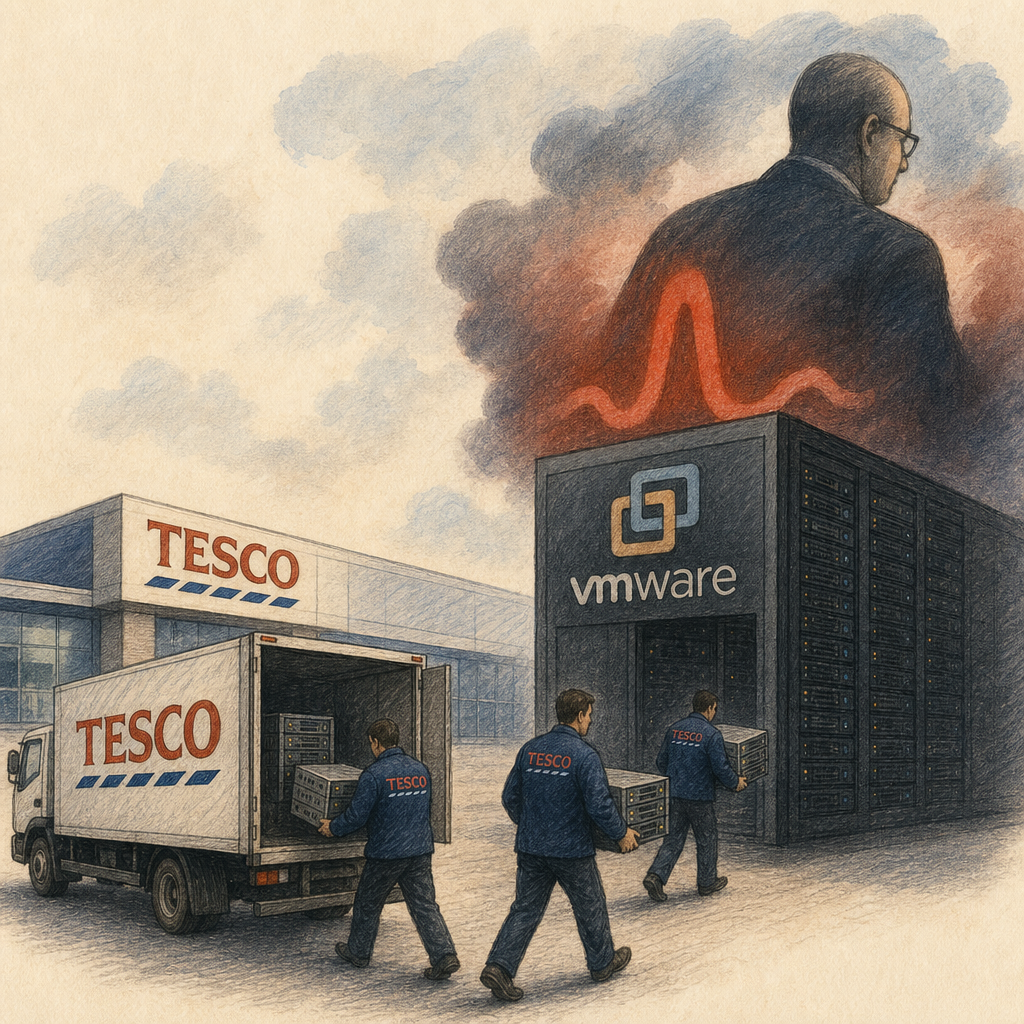
British supermarket chain Tesco has begun migrating 40,000 servers away from VMware's infrastructure. The move is part of a broader market backlash against the new commercial policies adopted by Broadcom, the company that acquired VMware.
According to technology industry sources, the exodus of large-scale customers is a direct response to the aggressive subscription model implemented by Broadcom following the completion of the acquisition. The new pricing strategy has generated widespread dissatisfaction and prompted major corporations to seek alternatives for their virtualization needs.
Tesco's case illustrates the magnitude of the financial and logistical impact that the licensing overhaul has had on the corporate ecosystem. Transitioning tens of thousands of servers represents a significant engineering and infrastructure effort on the part of the British retailer.
The European retailer's departure reinforces a continuing trend of large customers abandoning VMware. The flight of corporate accounts points to a significant challenge for Broadcom in retaining the customer base inherited from the virtualization vendor.
The technology market is closely watching the developments of this large-scale migration. Tesco's move could serve as a blueprint for other companies evaluating the viability of staying with or leaving VMware in light of the new contractual conditions imposed by Broadcom.
Why is Tesco moving away from VMware?
Tesco is migrating its 40,000 servers away from VMware due to widespread dissatisfaction with the aggressive new subscription model and commercial policies implemented by Broadcom after acquiring VMware.
How many servers is Tesco migrating from VMware?
Tesco is migrating 40,000 servers off VMware's infrastructure, representing a significant engineering and logistical effort for the British supermarket chain.
What does Tesco's departure mean for Broadcom and VMware?
Tesco's departure highlights a continuing trend of large enterprise customers abandoning VMware. It presents a significant challenge for Broadcom in retaining its inherited customer base and may serve as a blueprint for other companies evaluating similar moves.