The Electric Reckoning: FERC Ends AI’s Welfare State
The regulatory ultimatum to data centers marks the end of a blank check for AI infrastructure in the U.S., forcing the industry to bear the logistical and energy costs of its own growth.
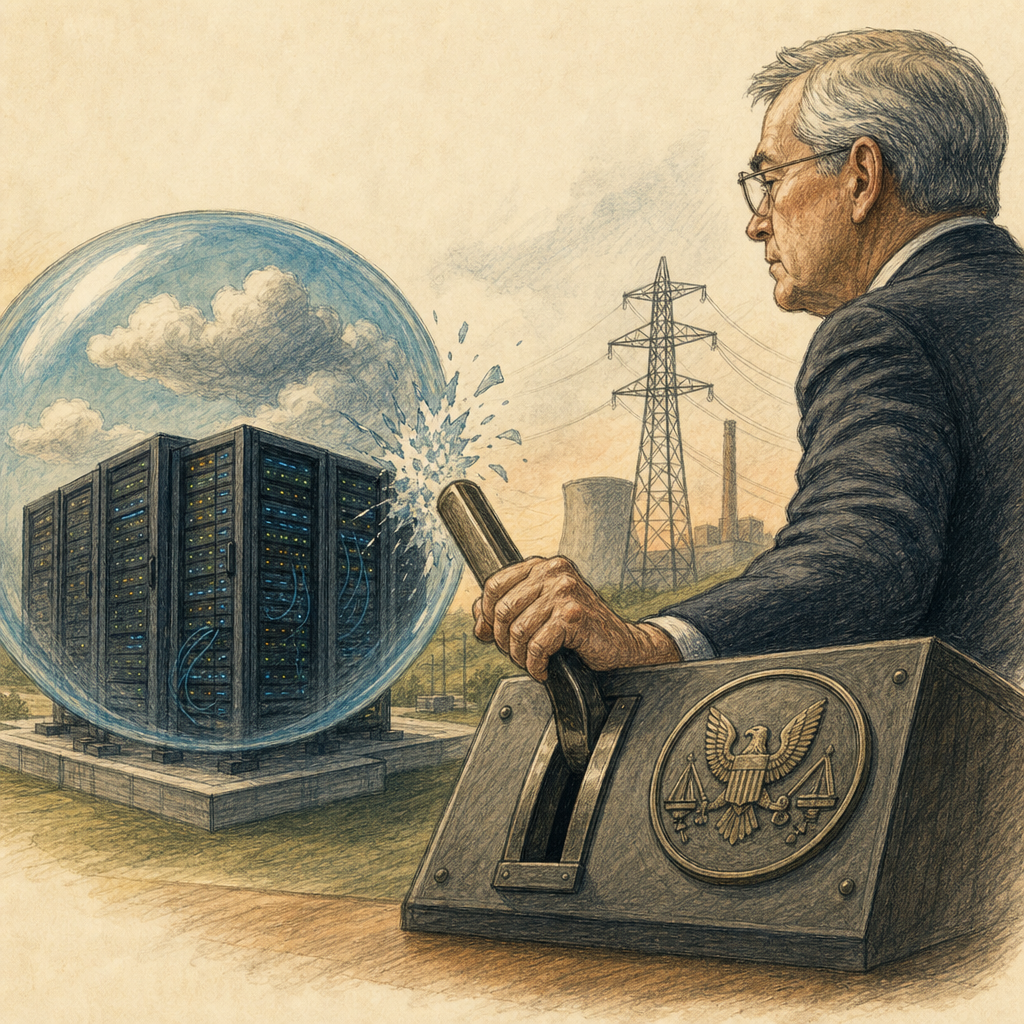
For the past decade, the artificial intelligence race has operated under a highly convenient economic premise: profits are private, but infrastructure is socialized. Tech giants have built data centers the size of small countries, keeping the financial cost of processing on their balance sheets while offloading the logistical and energy burden directly onto the power grid. This gentleman's agreement is over. The U.S. Federal Energy Regulatory Commission (FERC) has issued an ultimatum that rewrites the rules of the game for the AI ecosystem.
According to Tom's Hardware, FERC will order grid operators to accelerate the connection of AI data centers, but with a drastic and non-negotiable condition. Projects must generate their own power or agree to cut consumption during peak hours. The deadline for these changes to be implemented in the system is 90 days.
In practice, the measure is a reality check for Silicon Valley. By requiring AI companies to become energy prosumers—meaning they must bear the cost of generating their own power or accept service interruptions—FERC is forcing the industry to internalize its externalities. The unchecked growth of language models and inference architectures has hit a non-negotiable physical limit: the capacity of the wires and transformers in the American power grid. AI isn't just crunching data; it is suffocating the grid.
In my view, this 90-day ultimatum exposes the fragility of the narrative that scaling AI is merely a software engineering issue. The industry's true bottleneck is no longer a shortage of chips, but the physics of copper and thermodynamics. By refusing a blank check, the regulator signals that innovation does not justify the collapse of civil infrastructure. Venture capital and R&D departments will now have to allocate resources not just to more GPUs, but to microreactors, solar panels, and complex load management systems. Cheap, infinite energy—courtesy of taxpayers and neighbors—is no longer a given right.
The tech market loves to celebrate disruptions that occur in controlled environments, far from the constraints of the physical world. FERC has just reminded the AI industry that it inhabits the same universe as the rest of us. And by all indications, the era of frictionless growth is over.
What is FERC's new ultimatum for AI data centers?
FERC ordered grid operators to accelerate AI data center connections within 90 days, but with a strict condition: projects must generate their own power or agree to cut consumption during peak grid hours.
Why is FERC forcing data centers to generate their own power?
The unchecked growth of AI has hit the physical limits of the U.S. power grid. FERC is forcing the tech industry to internalize its energy costs and become a 'prosumer', ending the practice of socializing infrastructure burdens while keeping profits private.
How will FERC's ruling impact the future of AI infrastructure?
Venture capital and R&D will need to shift focus from solely buying GPUs to investing in microreactors, solar panels, and complex load management systems, as cheap, taxpayer-subsidized energy is no longer guaranteed.