Google Cloud Places Agentic AI at the Center of Its Corporate Strategy
According to AI Business, the company's bet targets enterprise applications where AI systems perform tasks with greater autonomy.
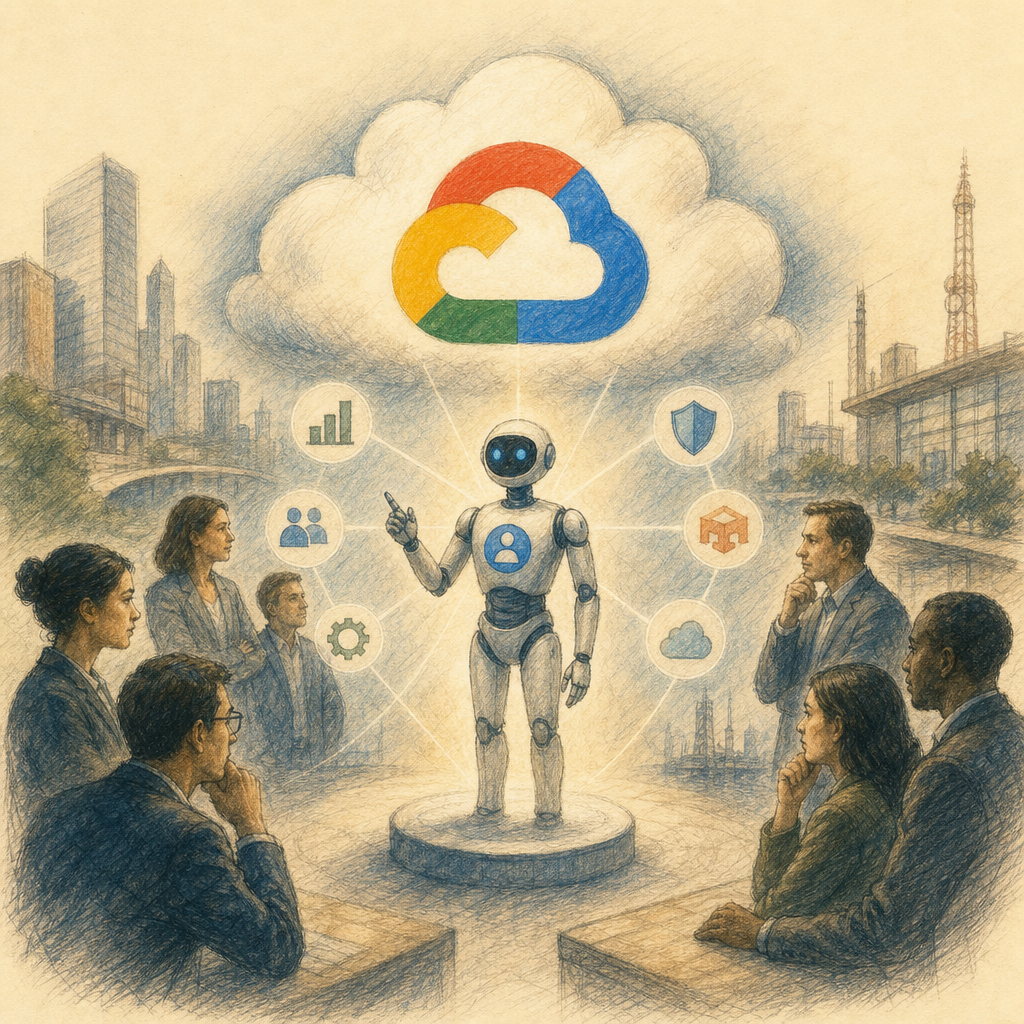
Google Cloud is positioning so-called agentic AI as a central pillar of its strategy for corporate clients, according to AI Business. The approach refers to systems capable of planning and executing work steps with more autonomy than traditional assistants based solely on responding to commands.
According to the publication, the company sees this model as an important part of the next phase of generative AI adoption in organizations. Rather than treating the technology merely as an individual productivity tool, the strategy outlined by AI Business points to uses integrated into enterprise workflows.
According to AI Business, Google Cloud's move comes at a time when cloud and software vendors are competing for space in corporate AI projects. In this context, the promise of agents is to automate more complex tasks by connecting language models, internal data, and business systems.
As further reported, the bet on agentic AI reinforces Google Cloud's attempt to differentiate its offering in the enterprise market. Adoption, however, is likely to depend on factors such as governance, security, integration with legacy systems, and the ability to demonstrate measurable operational gains.
- Google Cloud Bets Big on the Agentic Enterprise · aibusiness.com
What is Google Cloud's new strategy for corporate clients?
Google Cloud is making agentic AI a central pillar of its corporate strategy. The company focuses on AI systems that can plan and execute work steps with greater autonomy, integrating them directly into enterprise workflows rather than using them just as individual productivity tools.
How does agentic AI differ from traditional AI assistants?
Unlike traditional assistants that only respond to commands, agentic AI systems can plan and execute work steps autonomously. They automate complex tasks by connecting language models, internal data, and business systems.
What factors will determine the adoption of Google Cloud's agentic AI?
The adoption of agentic AI in the enterprise market will depend on governance, security, integration with legacy systems, and the ability to demonstrate measurable operational gains.