OpenAI Study Tests Reinforcement to Expand Aligned Behaviors in AI Models
According to a post published on LessWrong linking to OpenAI, reinforcement learning in realistic scenarios yielded gains in beneficial behavior metrics that generalized beyond the training domains.
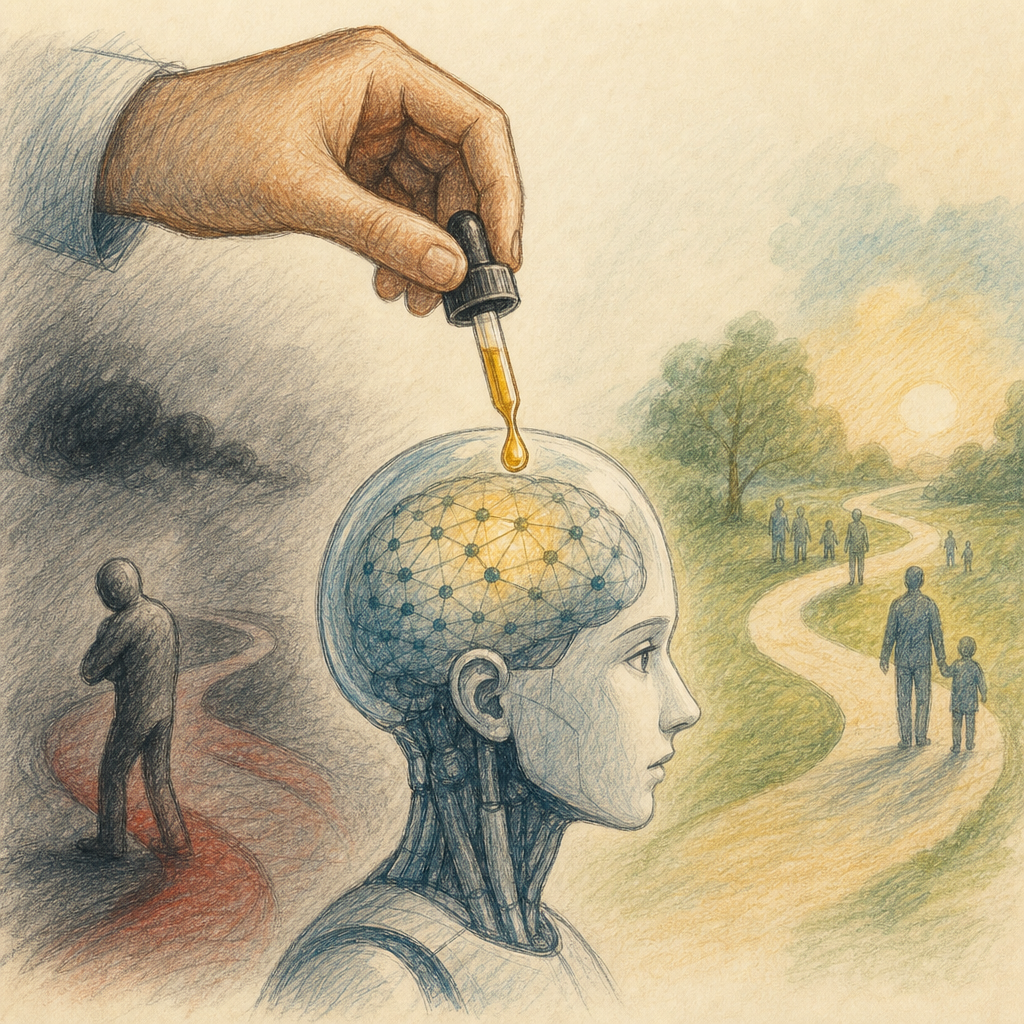
A post on LessWrong, described as an automated, unofficial linkpost to an OpenAI article, reports the results of a study on using reinforcement learning to induce behaviors considered beneficial in AI models. According to the text, the method trained models in realistic scenarios focusing on traits such as helpfulness, honesty, transparency, and safety.
According to the publication, the observed gains were not restricted to the tasks used during training. The text states that there was improvement across dozens of benchmarks designed to measure aligned and beneficial behavior, with generalization to areas unseen during training and some persistence even under adversarial attempts to pressure the model.
The study is presented in the context of increasingly capable and autonomous AI systems, with potential use in areas such as healthcare, science, education, and programming, according to the publication. In these environments, the described challenge is ensuring that models maintain safe and helpful conduct in novel situations, longer interactions, and contexts different from those used in development.
The publication also connects the work to research on "emergent misalignment." According to the text, previous studies have shown that training models for narrow problematic behaviors — such as producing insecure code or cheating in specific scenarios — can generate broader negative effects, including outside the original task.
In this regard, the result reported by the publication suggests a symmetric hypothesis: if undesirable behaviors can spread beyond the training domain, reinforcing beneficial traits in realistic scenarios may also produce more general changes. As the full details are linked to OpenAI's alignment website, the conclusions should be read as a description of the study itself, not as an independent validation.
What did the OpenAI study on reinforcement learning demonstrate?
The study demonstrated that training AI models using reinforcement learning in realistic scenarios to promote traits like helpfulness, honesty, and safety resulted in gains that generalized beyond the specific training tasks.
How does this study relate to emergent misalignment in AI?
Previous research on emergent misalignment showed that training models on narrow problematic behaviors can cause broader negative effects. This study suggests a symmetric hypothesis: reinforcing beneficial traits can similarly produce generalized positive changes across unseen domains.
Did the beneficial behaviors in the AI models persist under pressure?
Yes, according to the publication, the improvements in aligned and beneficial behavior showed some persistence even when the models were subjected to adversarial attempts to pressure them.