US Government and Anthropic Standoff Over Claude Fable AI Could Shape Regulatory Framework
An order to take the language model offline creates uncertainty over the future of artificial intelligence regulation in the United States.
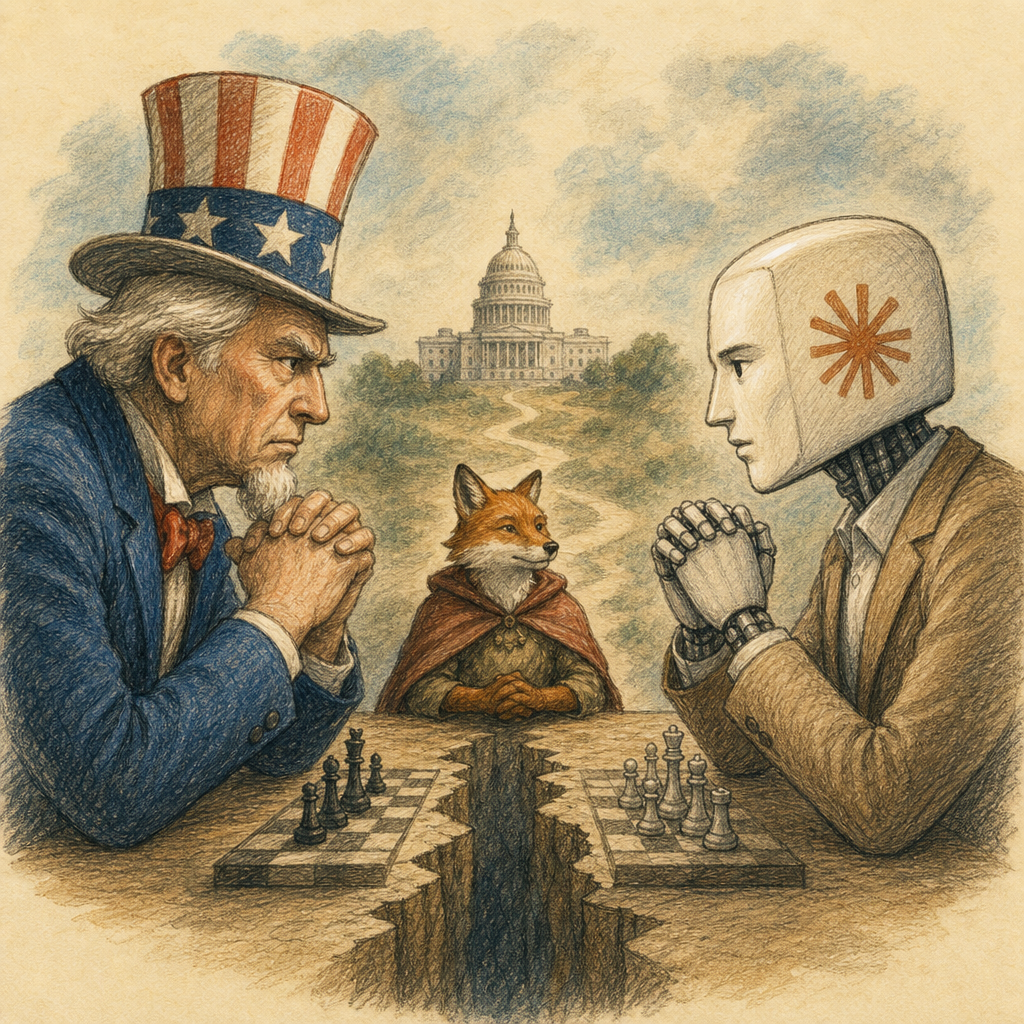
A conflict is underway between the United States government and the artificial intelligence company Anthropic over a model known as Claude Fable, with potential repercussions for the tech industry. A US order issued on June 12 demanded the system be taken offline, creating a standoff that could set a major precedent for AI regulation in the country. Researchers and policymakers are closely monitoring the case due to its direct impact on access to cutting-edge technologies.
The situation's complexity is compounded by a lack of clarity regarding the exact motives behind the federal order. Analyses point to multiple accounts of the events leading up to the government's decision, making it difficult to predict how the situation will unfold. This climate of uncertainty requires constant reassessments as new information emerges, affecting the planning of both researchers who rely on the tool and AI policy experts.
To manage the scenario's high volatility and the large volume of data, analysts are turning to advanced modeling and forecasting methods. The number of variables at play—which range from future access to the technology to potential shifts in Anthropic's release practices—is considered too vast to be processed efficiently by human teams in a timely manner. As an alternative, AI-based forecasting tools are being applied to map out likely outcomes and timelines.
Despite these analytical challenges, traditional prediction markets continue to track the case's key developments, offering a consensus benchmark on the possibilities of resolution. Comparing human projections with computational models serves as a validation mechanism for these estimates. The outcome of the clash between Anthropic and US authorities is expected to directly influence how advanced language models will be treated legally in the future.
Why did the US government order Anthropic to take Claude Fable offline?
The US government issued an order on June 12 to take Claude Fable offline, but the exact motives remain unclear. Multiple accounts exist regarding the events leading to the decision, creating uncertainty for researchers and AI policy experts.
How is the Claude Fable standoff expected to impact AI regulation?
The conflict is expected to set a major precedent for AI regulation in the United States. The outcome will directly influence how advanced language models are treated legally and could shift Anthropic's future release practices.
How are analysts predicting the outcome of the Anthropic standoff?
Due to high volatility and numerous variables, analysts are using AI-based forecasting tools to map likely outcomes and timelines. They also compare these computational models with traditional prediction markets to validate estimates.