Amazon Astro: How the Company Defined the Personality of Its First Home Robot
An internal battle over whether to make the device an Alexa on wheels or create its own character was resolved in favor of an autonomous identity.
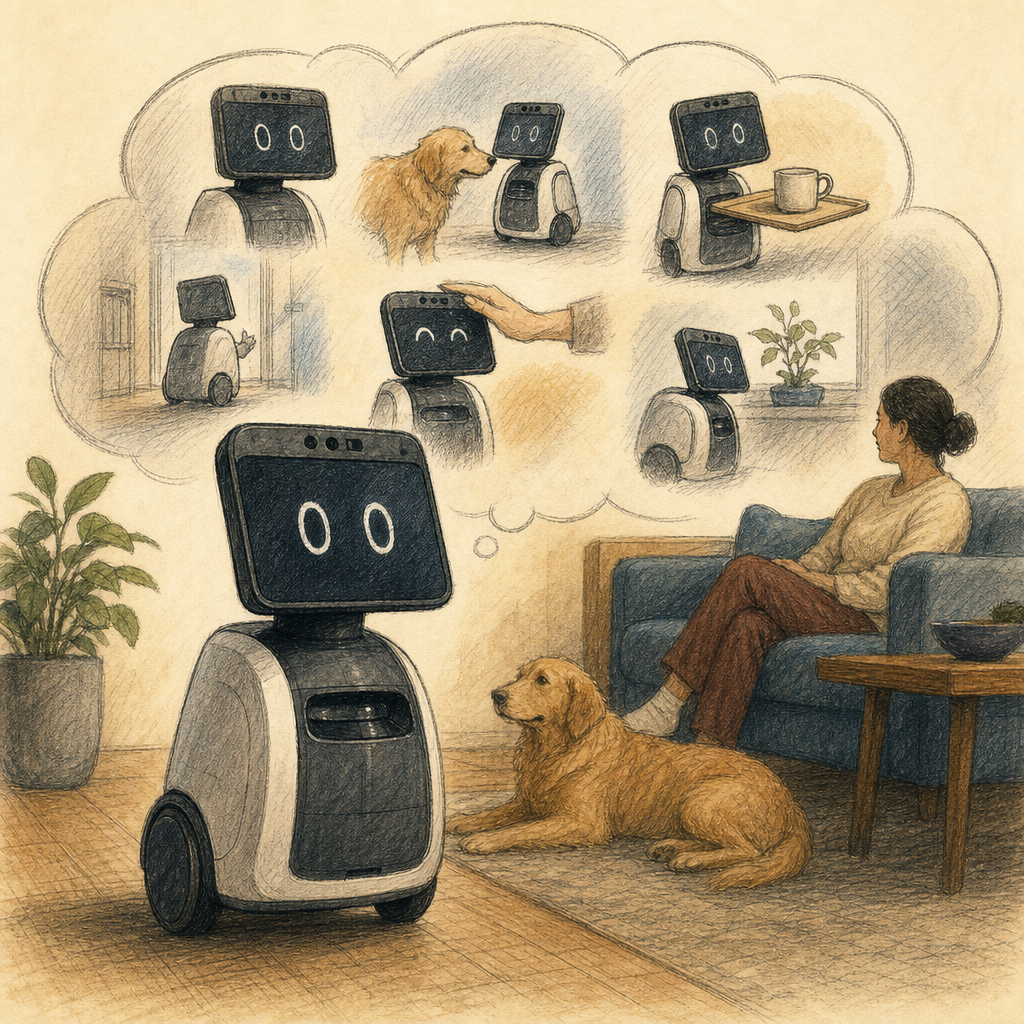
Developing the Astro, Amazon's first consumer home robot, required resolving a central debate within the team: would the device simply be the Alexa virtual assistant on wheels, or a machine with its own personality? The robot uses cameras and sensors to map environments, patrol areas, check on people, and transport small items. However, even before it was given a name, the team was divided over the product's direction, weighing the option of treating it merely as a mobile utility or giving it a unique character.
The user experience (UX) team argued that the device should not focus on Alexa. Their central argument was that a machine moving around the house and turning toward people with intent could not be treated merely as an appliance. The team concluded that users would project a personality onto the robot regardless of the developers' wishes, leaving them to decide whether this characterization would be designed or happen accidentally.
User testing validated the choice for an autonomous identity. Participants did not see the robot as Alexa, but rather as a distinct character, which matched their expectations for the device. According to the design team's account, Alexa's presence on the robot felt strange and uncomfortable. However, creating an entirely new voice for Astro in 2018 would have been a slow and financially unviable process.
The solution was to establish a division of roles. Alexa took on a supporting role, responsible for the actual speaking, while Astro remained the protagonist, communicating as much as possible without the use of words. Interaction with users now occurs through sounds, movements, and facial expressions.
Despite defining this sonic language, the team identified a structural gap in the project. There was no professional assigned to delve into developing the robot's personality. Every decision about how the device moved, sounded, paused, or reacted was considered a character choice, requiring collaboration across multiple disciplines so that the robot's identity could be applied cohesively.
Does the Amazon Astro robot have the same personality as Alexa?
No. Amazon's UX team decided Astro needed its own autonomous identity rather than being Alexa on wheels. Alexa serves a supporting role, while Astro acts as the protagonist, communicating primarily through movements, sounds, and facial expressions.
How does the Amazon Astro robot communicate with users?
Astro communicates mostly without words using a sonic language of sounds, movements, and facial expressions. Alexa handles the actual speaking, establishing a division of roles where Astro remains the distinct character.
Why did Amazon decide to give Astro its own unique character?
User testing showed that participants viewed the robot as a distinct character rather than Alexa, and having Alexa's presence on the moving device felt uncomfortable. Since users naturally project personality onto moving machines, the team chose to design this identity intentionally.