ASML Denies U.S. Government Report on Shipping EUV Machines to China
The Dutch company refuted rumors that advanced lithography equipment had been shipped to the Asian country, calling the information damaging to its reputation.
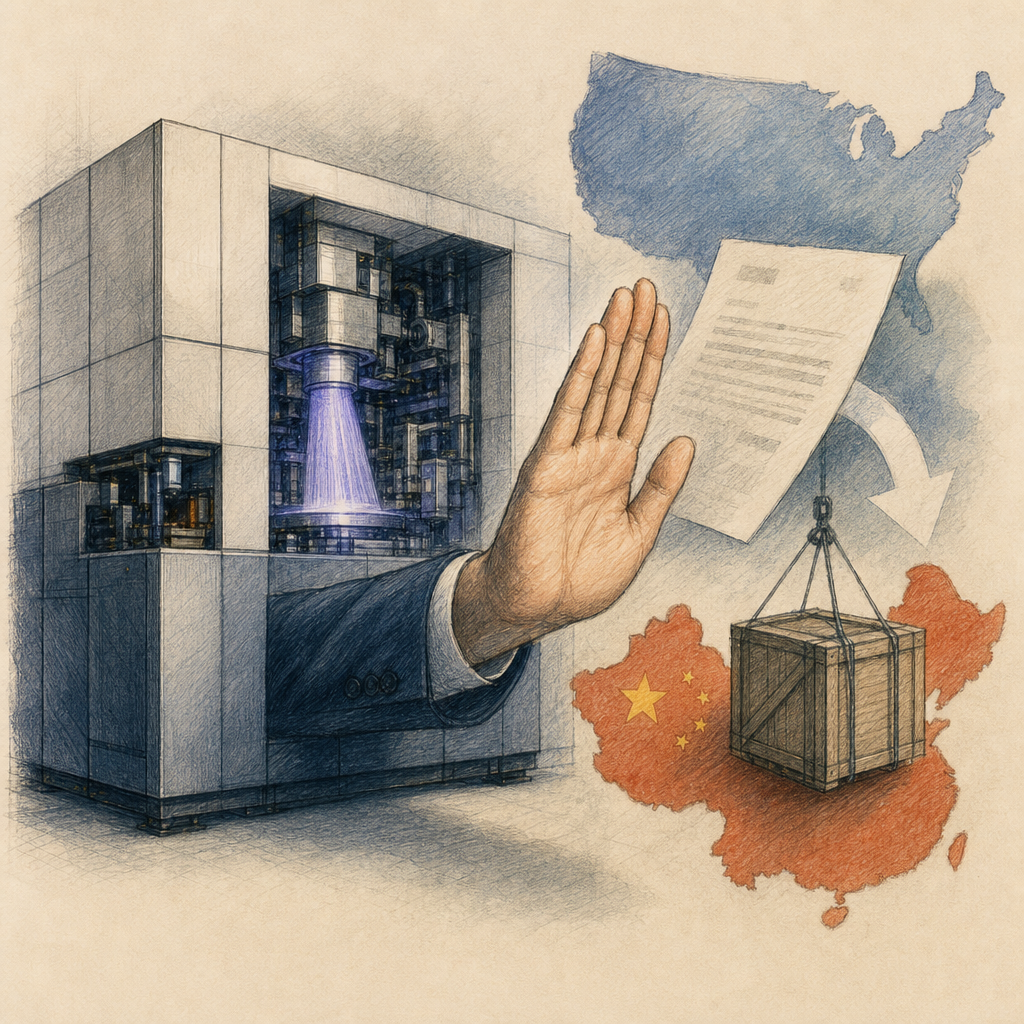
ASML, the Dutch semiconductor equipment manufacturer, has vehemently denied a United States government report suggesting it shipped an EUV (Extreme Ultraviolet) lithography machine to China. The company called the rumors inaccurate and damaging to its reputation, reinforcing its position that it has not sold such systems to Chinese territory.
The controversy gained prominence after U.S. Secretary of Commerce Howard Lutnick expressed concern in a conversation with ASML executives. According to sources' accounts, the U.S. government representative showed unease over the possibility that China already had access to an EUV lithography system, a crucial technology for manufacturing state-of-the-art chips.
The trade of EUV equipment to China is strictly prohibited by international sanctions coordinated by the United States and the Netherlands. These machines are essential for producing semiconductors at advanced nanometer scales, and the restriction aims to limit the Asian country's technological and military advancement in the chip sector.
In rebutting the allegations, ASML reiterated that it strictly complies with all applicable export laws. The company declined to comment specifically on the details of conversations with U.S. officials but stood firmly by its public statement that the circulating information regarding the shipment of the equipment does not reflect reality.
Did ASML ship EUV lithography machines to China?
No. ASML has vehemently denied a U.S. government report suggesting it shipped an EUV lithography machine to China, calling the rumors inaccurate and damaging to its reputation.
Why are EUV lithography machines restricted from being exported to China?
The trade of EUV equipment to China is strictly prohibited by international sanctions coordinated by the U.S. and the Netherlands. These machines are essential for manufacturing state-of-the-art semiconductors, and the restriction aims to limit China's technological and military advancement in the chip sector.
How did ASML respond to the U.S. concerns about the alleged shipment?
ASML reiterated that it strictly complies with all applicable export laws. While declining to comment on specific conversations with U.S. officials, the company firmly stated that the circulating information regarding the shipment does not reflect reality.