China Brings Tech Sector Together to Build AI Data Centers in Orbital Satellites
The initiative unites rocket and chip manufacturers with AI labs to develop computational infrastructure in space.
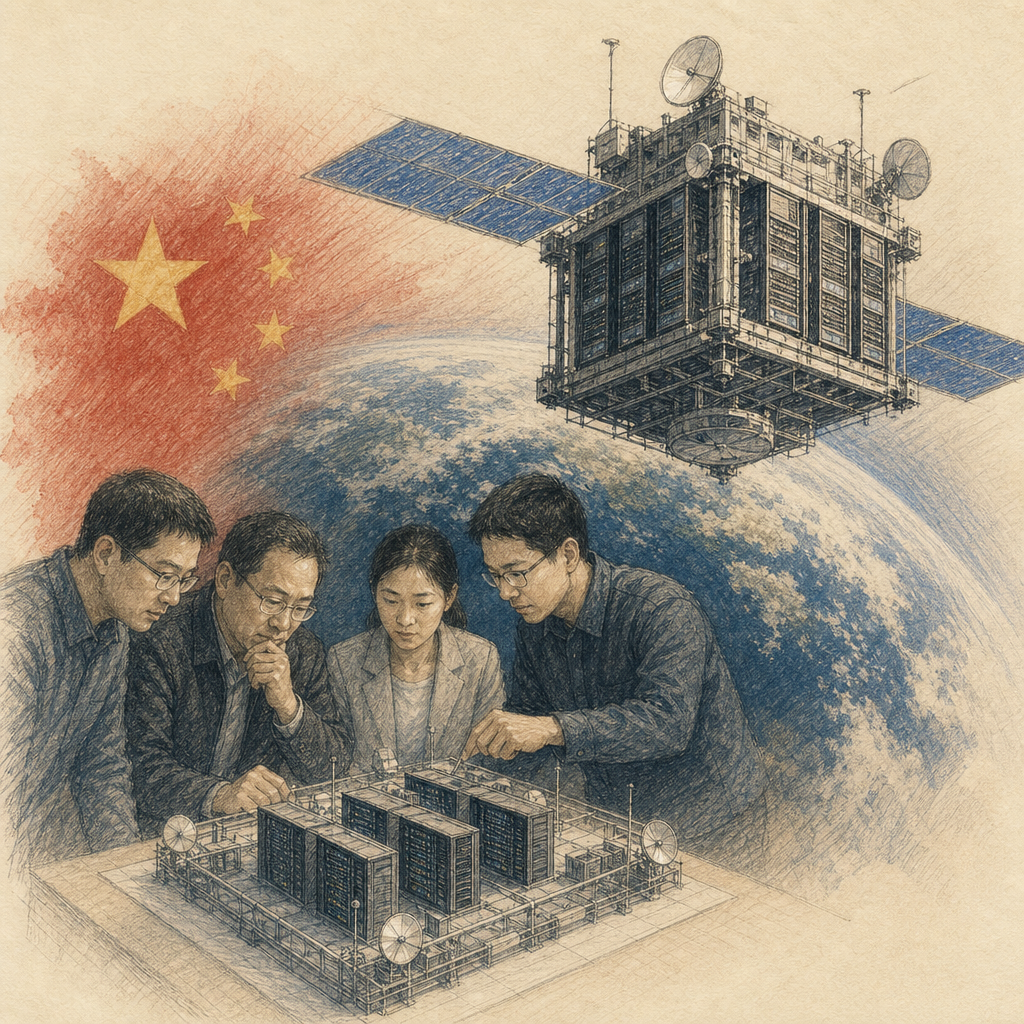
The Beijing government announced the creation of the Space Computing Industry Innovation Center, a consortium bringing together rocket and satellite manufacturers, chip producers, and artificial intelligence labs. The project's goal is to develop a space-based AI data center system capable of operating independently from the terrestrial power grid.
According to Tom's Hardware, the initiative represents a coordinated effort by the Chinese state to unify different branches of the national tech sector around orbital computing. The space infrastructure would allow artificial intelligence data processing directly in orbit, eliminating the dependence on conventional energy and physical network infrastructures on the planet.
China's move comes amid an intensifying global space and tech race. According to Tom's Hardware, the announcement was made a week before Elon Musk, founder of SpaceX, revealed the AI1 rocket, indicating a strategic parallel between both nations' advancements in integrating space transportation and artificial intelligence.
The model proposed by China bets on forced collaboration between semiconductor companies, space operators, and algorithm developers to accelerate the technology's viability. The strategy aims to position the Asian country as a direct competitor to U.S. private initiatives in the off-Earth computational infrastructure segment.
What is China's Space Computing Industry Innovation Center?
It is a consortium created by the Beijing government that unites rocket and satellite manufacturers, chip producers, and AI labs to develop a space-based AI data center system.
How will China's orbital AI data centers work?
The space infrastructure will allow artificial intelligence data processing directly in orbit, operating independently from the terrestrial power grid and conventional physical network infrastructures.
Why is China developing computational infrastructure in space?
The initiative aims to accelerate technology viability and position China as a direct competitor to U.S. private initiatives in the off-Earth computational infrastructure segment amidst an intensifying global space and tech race.