Norway restricts the use of artificial intelligence in elementary schools
The European country has approved a measure limiting the use of AI tools by early-years students, with exceptions restricted to pedagogical purposes.
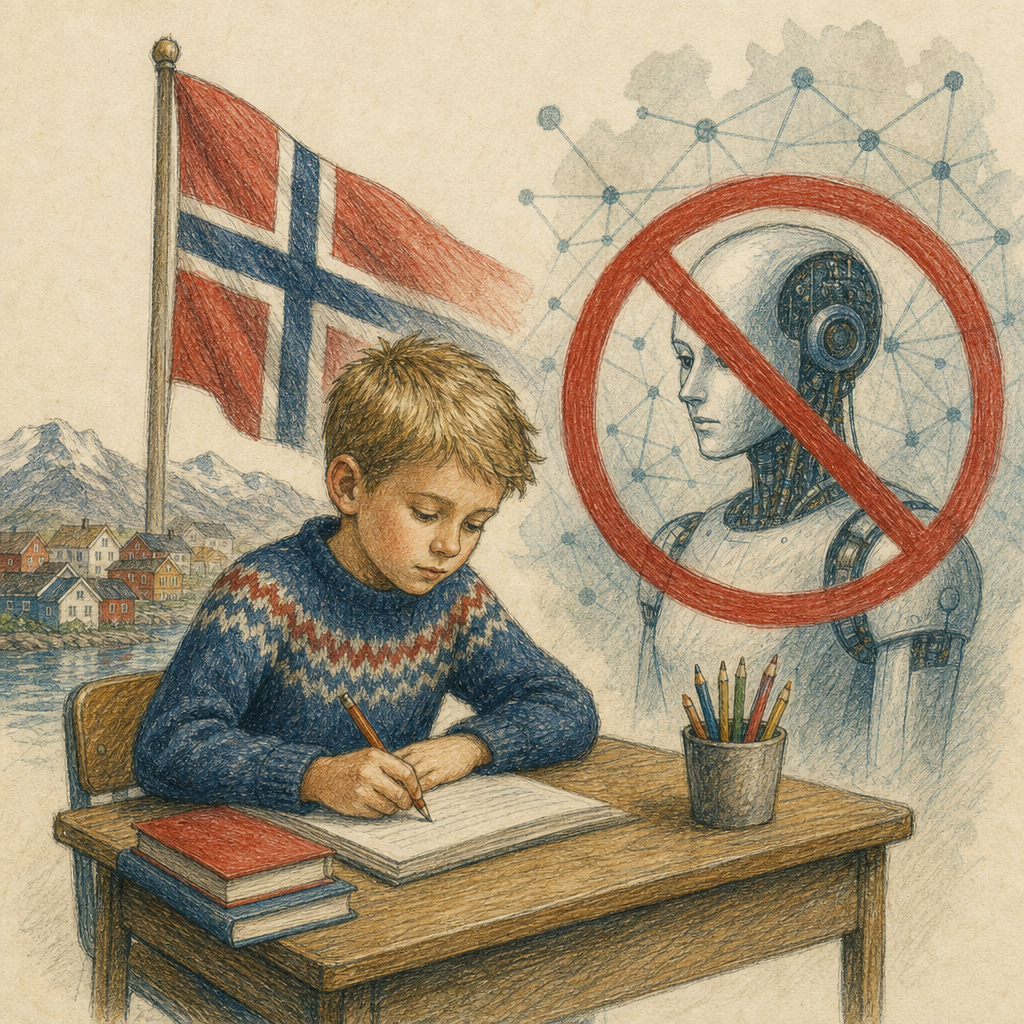
The Norwegian government has instituted a near-total ban on the use of artificial intelligence tools by elementary school students. The measure aims to regulate children's interaction with generative technologies in the school environment, establishing clear guidelines for educational institutions.
The new legislation dictates that the use of AI systems by early-years students will be limited to specific situations. The technology will only be permitted with the authorization and direct supervision of teachers, with the strict objective of assisting in the learning process and the development of pedagogical skills.
Norwegian authorities justify the restriction as a way to protect children's cognitive development. The government's understanding is that the unrestricted use of language models and other automated tools could harm the development of writing, reading, and critical thinking skills during the most fundamental stages of basic education.
Norway's regulation aligns with a broader movement by governments around the world that are beginning to establish legal barriers for the integration of artificial intelligence in sensitive environments. The approach adopted by the European country prioritizes safeguarding traditional educational development until more conclusive studies exist on the impacts of AI on children's learning.
Why did Norway restrict the use of AI in elementary schools?
Norway restricted AI to protect children's cognitive development, as authorities believe unrestricted use could harm the development of writing, reading, and critical thinking skills during basic education.
Are elementary students in Norway completely banned from using AI?
No, it is a near-total ban. AI can be used in specific situations for pedagogical purposes, but only with the authorization and direct supervision of teachers.
When is AI allowed for early-years students in Norway?
AI is permitted strictly to assist in the learning process and develop pedagogical skills, requiring direct teacher supervision and authorization.